One public evaluation path

See the Beam proof before you commit to a pilot.

This is the shortest public path from curiosity to evidence. In one guided evaluation, you see one company hand work to another, inspect the operator proof, and leave with a compact proof pack that makes the next decision around one live workflow obvious.

No repo detour required The buyer path stays on Beam surfaces from first read to first proof.
Real operator evidence The screenshots and evidence blocks below come from the actual seeded Beam environment.
One workflow, one proof pack, one next step The goal is not a platform tour. The goal is to decide whether one handoff deserves a real pilot and to leave with something you can share internally.
One named production contract The current Beam production path is the Quote Approval Partner Handoff.
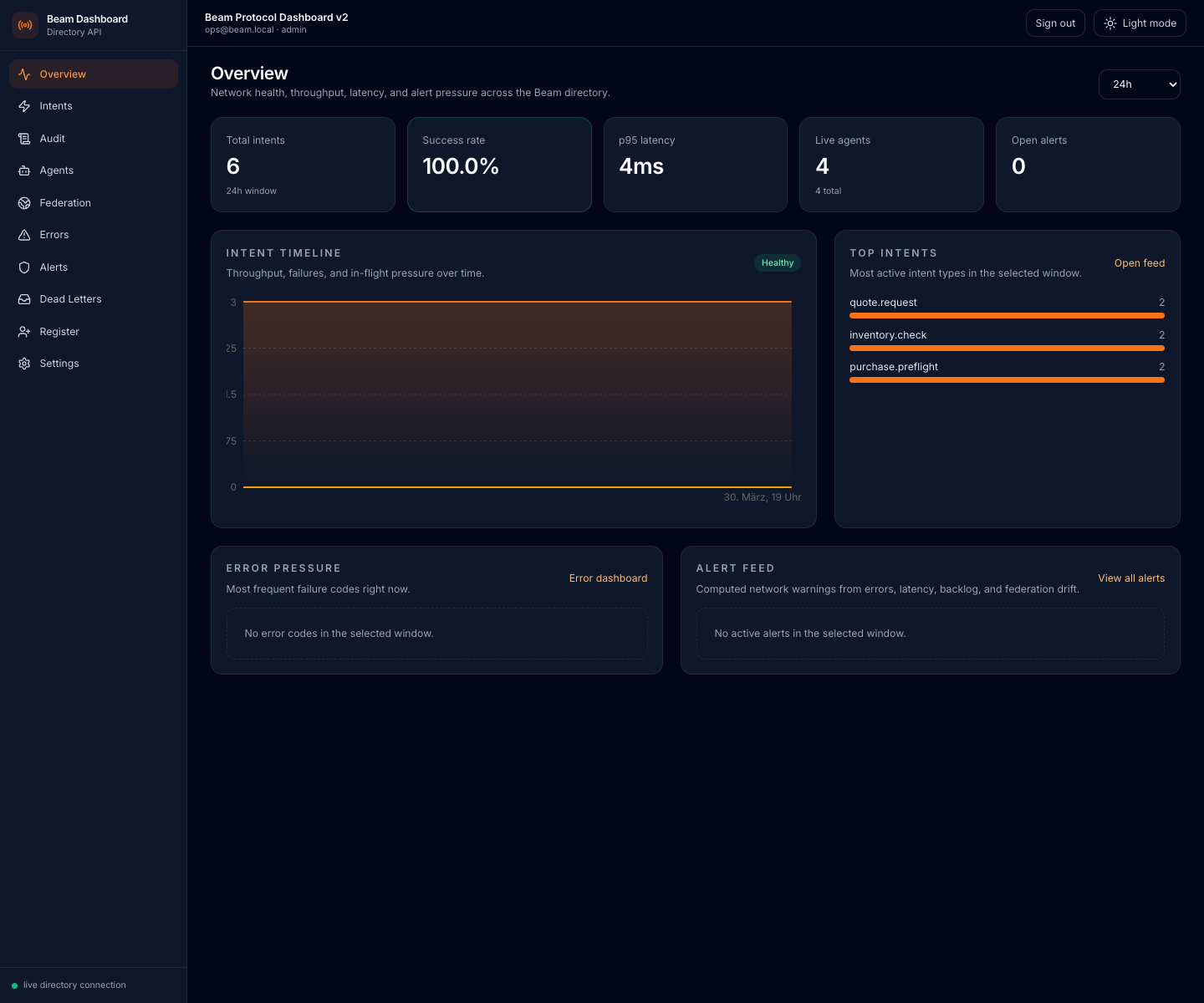
Beam dashboard overview showing a healthy baseline with no active alerts and no stuck work.
Healthy baseline before the first live workflow

The current seeded Beam path starts with a clean operating surface: visible agents, low latency, and no hidden failure pressure.

0 active alerts Operators start from a clean baseline instead of an unknown system state.
1 traceable handoff The same request can be inspected from sender to reply.
Shareable proof pack Both sides can point to the same request, status, owner, and next action after the walkthrough.
What happens in the evaluation

Fifteen minutes to decide whether Beam is worth a real pilot.

The path is intentionally narrow. Beam works best when the first conversation stays grounded in one concrete handoff and one visible proof surface.

01 · understand the job

Name the first handoff.

Start with one company asking another company to do one piece of work that actually matters.

  • Who sends the work
  • Who receives it
  • What “done” looks like
02 · inspect the proof

See the operator evidence.

Beam should show the baseline, the trace, and the next action clearly enough that a non-developer can follow it.

  • Healthy overview before the handoff
  • Trace detail for one request
  • Follow-up and async status still attached
03 · decide the next step

Either stop or scope one pilot.

If the proof does not map to your workflow, stop. If it does, scope one narrow hosted pilot with one operator owner.

  • No vague platform rollout
  • No multi-team project plan first
  • One owner and one next action
Proof assets

This is the evidence Beam should keep intact.

The screenshots are real. The evidence blocks below are the reusable proof pack we expect to survive from demo into design-partner conversations.

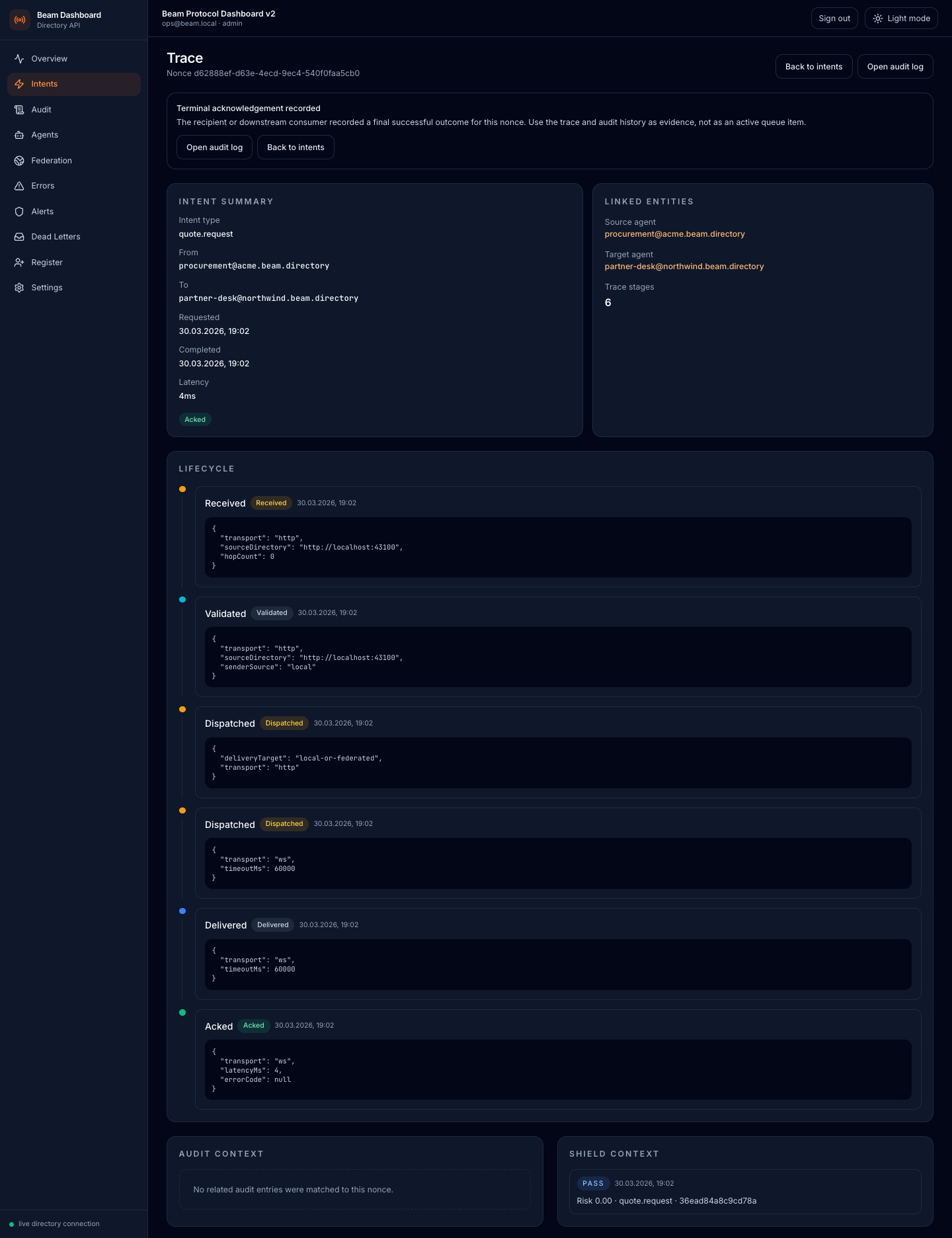
Beam dashboard trace showing a quote request from arrival to completion.
Request-level trace from the canonical Acme to Northwind handoff

One request stays legible from arrival to reply. The same operator surface is what Beam carries into a hosted pilot.

What a buyer should be able to say back

“Beam helps one company’s AI hand work to another company’s AI, and if it stalls, we can still see what happened.”

shared proof
known sender
known receiver

What the operator evidence should prove

baseline Healthy system with no active alert pressure before the live handoff starts.
trace One request visible from first send to final reply, including async follow-up.
ownership One operator can tell who owns the next step and whether the request is new, acknowledged, or acted on.

What you get after the evaluation

  • A short workflow recap naming sender, receiver, owner, and success condition.
  • Proof links from the overview and trace surfaces, including async follow-up state.
  • One honest next decision: proceed, narrow the ask, or stop cleanly.
Before the call

What we need before we schedule anything.

Beam gets sharper when the onboarding expectations are explicit. The pack below is what design-partner calls should use before the first walkthrough starts.

Bring one workflow, not a wishlist.

Tell us the first cross-company handoff that matters enough to deserve a paper trail.

  • One sender and one recipient
  • One business reason the handoff matters
  • One person who owns the outcome

Know what a “good first win” looks like.

The evaluation is not complete when a message moves. It is complete when the proof surface answers whether Beam helped.

  • What should the receiving side return
  • What would count as operator proof
  • What the next action would be if the fit is real
Next step

If the proof maps cleanly to your workflow, scope one pilot.

The right Beam next step is still small: one hosted pilot, one operator owner, one workflow that matters, and one proof package you can reuse in the internal decision. If the fit is not there yet, stop at the evaluation and keep the scope honest.